ERP Therapist for OCD Near Salt Lake City: What to Expect and How to Choose
A plain-language guide to the treatment that targets OCD's cycle and how to find the right therapist.

If you live or work in Salt Lake City and OCD is running your day, the hardest part is often knowing what real treatment looks like. Many people try reassurance from loved ones, avoiding triggers, or willpower, and still feel stuck. Exposure and Response Prevention (ERP) is a different approach: structured, practical, and aimed at the cycle that keeps OCD going.
This page explains ERP, what to look for in an ERP therapist, the symptoms that point to OCD, and how to start with Dustin Hall, LCSW. His practice is in Bountiful, a short drive north of Salt Lake City, and telehealth is also available.
You do not need to be certain it is OCD before you call.
ERP therapy explained
ERP stands for Exposure and Response Prevention. It is a research-based behavioral treatment for OCD and other anxiety-related disorders, and it works on the cycle that keeps OCD going rather than on the content of any one thought.
Exposure means gradually facing the thoughts, situations, or sensations that trigger your OCD.
Response prevention means choosing not to do the compulsion afterward: no washing, checking, reassurance, or mental review.
Why it works
Every time you perform a ritual, your brain learns that the trigger was dangerous and the ritual saved you. That lesson makes the next obsession stronger. When you stay with the discomfort and skip the ritual, your brain gets new information: anxiety rises, peaks, and eases on its own, and you can handle it.
What a step looks like
Someone with checking OCD might lock the door once and leave without going back. Someone with contamination fears might touch a doorknob and wait before washing. You and your therapist agree on each step before you try it, and you start with triggers you can manage and build from there.

What ERP is not
ERP is not being thrown into your worst fear, and it is not talk therapy alone. Talking helps you understand OCD, but ERP is built around practice.
ERP compared with what people usually try first
Common response
Reassurance from others
Avoiding triggers
Analyzing the thought
ERP
What it feels like
Relief for a few minutes
Safer, for now
Feels like problem-solving
Uncomfortable, then easier
Effect on the OCD cycle
Strengthens the need to ask again
Shrinks your life and confirms the fear
Keeps you engaged with the obsession
Weakens the cycle through practice
How to choose an ERP therapist in the Salt Lake area
Not every therapist who treats anxiety uses ERP. These questions help you tell the difference.
Do you use exposure and response prevention for OCD, and how much of your work is OCD and anxiety?
How do we build the exposure plan, and do I have a say in each step?
How do you handle reassurance, including when I ask you for it?
Will I have practice to do between sessions?
How will we track progress?
Can you coordinate with my prescriber if I take medication?
Signs a treatment plan may not fit OCD
It centers on analyzing why a thought appeared, with no practice facing it.
It encourages you to avoid your triggers.
The therapist offers repeated reassurance in session.
What Salt City Mental Health offers
Dustin Hall, LCSW, focuses on OCD and anxiety-related disorders and has specialized in anxiety for eight years. He is a professional member of the International OCD Foundation, and his site notes that he is one of the few counselors in Bountiful who specializes in ERP for anxiety disorders. Sessions can include CBT, DBT, and ACT skills alongside ERP. See his full profile.

OCD symptoms:
how to tell if it might be OCD
OCD combines obsessions (unwanted, distressing thoughts, images, or urges) with compulsions (actions or mental rituals meant to reduce the distress). It is more than a preference for order, and it often goes unrecognized because many rituals happen in your head.
Themes people bring to therapy
Contamination: fear of germs or illness, with washing or avoidance
Checking and harm: doubt about locks, appliances, or whether you hurt someone, with rechecking
Just-right and symmetry: a need for things to feel even or exact
Unwanted thoughts: violent, sexual, or religious thoughts that feel out of character
Relationship and moral doubt: constant questioning of love, honesty, or character
Mental rituals: reviewing, counting, praying, or analyzing to feel certain
Hidden compulsions
Reassurance-seeking, repeated checking, tracking, and avoidance can all be compulsions. They bring relief that lasts minutes and costs hours.
Signs it may be time to get help
Rituals or worry take up much of your day.
You avoid places, people, or tasks because of them.
Work, school, or relationships are suffering.
Reassurance from others no longer helps.

We can lift the weight
you’re carrying
Salt City Mental Health is in Bountiful, so people from nearby Davis County communities such as Woods Cross, Centerville, North Salt Lake, Farmington, Kaysville, and Layton can be seen close to home. Consistency matters in ERP, and a short drive makes it easier to keep appointments.
Where to find us
537 W 2600 S, Suite 203, Bountiful, UT 84010. The office is in the executive suites above Parsons Bakery, with off-street, lit parking and wheelchair access. Appointments are available in person or by telehealth.

Meet your therapist
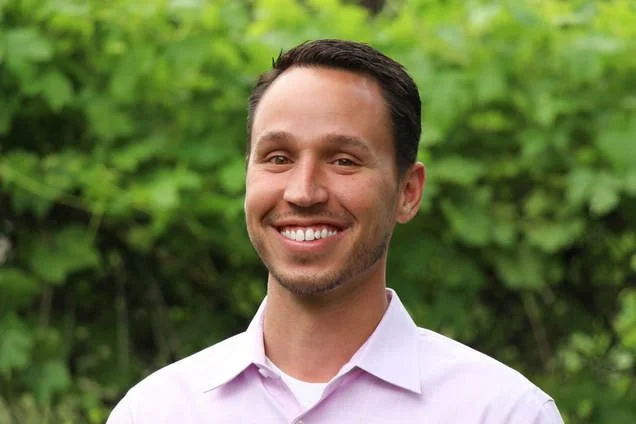
Dustin Hall, LCSW, founded Salt City Mental Health and has specialized in treating anxiety for eight years, with more than a decade in mental health. He holds a Master of Social Work and a Bachelor of Psychology from the University of Utah and is a professional member of the International OCD Foundation. He also treats body-focused repetitive behaviors and is certified in CBT-based treatment for trichotillomania (hair pulling) and skin picking disorder. Read his full profile.

Additional Services from Salt City Mental Health